Станок для высечки с ЧПУ: почему 90% производителей делают это неправильно?
Why do so many fabrication shops struggle with their CNC notching machine? The answer often lies in overlooking the critical role of proper notching in metal fabrication. In this deep dive, we reveal the common pitfalls and how to avoid them.
Introduction: The Hidden Cost of Notching
Imagine a busy fabrication shop in Ohio. The owner, Mike, is proud of his new CNC notching machine. But within weeks, his team is reworking 30% of parts due to poor fit-up. The culprit? Inaccurate notching. This scenario is all too common. A CNC notching machine is not just a tool; it's the backbone of precision fabrication. Yet, many get it wrong by focusing on price over performance. At NANTONG LUCUBRATE MACHINERY TECHNICAL LTD., we've seen it all. Let's explore why 90% of fabricators face issues and how to be in the top 10%.
Pain Point 1: Inaccurate Angle Cuts Leading to Weld Rework
In a shop in Birmingham, UK, a team was producing structural steel frames. Their CNC notching machine was cutting angles with a tolerance of ±2 degrees. This might sound small, but it caused gaps up to 3mm in joints. Welders had to fill these gaps, adding 15 minutes per joint. With 200 joints per day, that's 50 hours of extra work weekly. The cost? Over £10,000 per month in labor and materials. Worse, the rework delayed projects, damaging the company's reputation.
The root cause: a machine with poor rigidity and outdated control software. The notching head vibrated during cutting, and the controller couldn't compensate for tool wear. The result was inconsistent cuts, leading to scrap and rework.
Pain Point 2: Slow Cycle Times Bottlenecking Production
In a German automotive supplier, a CNC notching machine was taking 45 seconds per part. With a demand for 500 parts per shift, the machine couldn't keep up. They ran two shifts, but still fell short. The bottleneck delayed deliveries to the assembly line, risking penalties. The machine's feed rate was limited, and tool changes took 10 minutes each. The shop lost €5,000 per day in potential revenue.
Slow cycle times often stem from inefficient motion control, manual tool changes, and lack of automation. Many fabricators accept this as normal, not realizing that modern machines can cut cycle times by 50% or more.
Pain Point 3: High Tooling Costs and Frequent Downtime
A fabricator in Texas was spending $2,000 per month on notching tools. The tools wore out quickly because the machine's hydraulic system was inconsistent, causing excessive force on the edges. Downtime for tool changes averaged 2 hours per week, costing $1,500 in lost production. Over a year, that's $42,000 in unnecessary expenses.
The issue: poor machine design and low-quality tooling. Many operators blame the tools, but the real problem is the machine's inability to maintain consistent pressure and alignment.
Solutions: Precision, Speed, and Durability from NANTONG LUCUBRATE
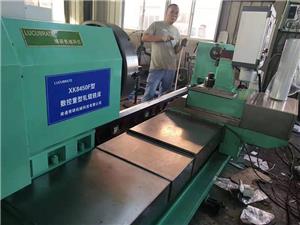
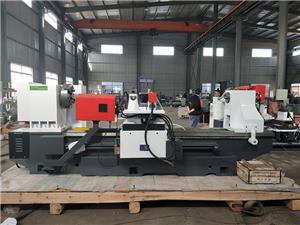
At NANTONG LUCUBRATE MACHINERY TECHNICAL LTD., we engineer CNC notching machines that tackle these pain points head-on. Our machines are built with high-rigidity frames, precision linear guides, and advanced CNC systems from Siemens and Fanuc. Let's see how we solve each issue.
Solution for Pain Point 1: Accuracy
Our machines use a double-column structure and pre-tensioned ball screws to eliminate vibration. The CNC system compensates for tool wear in real-time, maintaining angle tolerance within ±0.1 degrees. This ensures joints fit perfectly, reducing weld rework by up to 90%. In the Birmingham case, after switching to our machine, the shop reduced rework to 3%, saving £9,000 per month.
Solution for Pain Point 2: Speed
We integrate high-speed servo motors and automatic tool changers. Our notching machines achieve cycle times as low as 15 seconds per part, with tool changes in under 30 seconds. The German supplier increased output to 800 parts per shift, eliminating the bottleneck and earning a bonus for on-time delivery.
Solution for Pain Point 3: Durability
Our hydraulic systems use proportional valves for consistent pressure, extending tool life by 50%. The Texas fabricator now spends $800 per month on tools and has reduced downtime to 15 minutes per week, saving $35,000 annually.
Comparison: Traditional vs. LUCUBRATE CNC Notching Machines
| Feature | Traditional Machine | LUCUBRATE Machine |
|---|---|---|
| Angle Tolerance | ±2° | ±0.1° |
| Cycle Time (per part) | 45 sec | 15 sec |
| Tool Life | 1 week | 2 weeks |
| Downtime per Week | 2 hours | 15 minutes |
| Rework Rate | 30% | 3% |
Customer Success Stories
Case 1: MetalWorks Inc., Ohio, USA
MetalWorks Inc. produced agricultural equipment. Their old machine caused 25% rework. After installing our LUCUBRATE CNC notching machine, rework dropped to 2%. "The precision is incredible. We've cut our welding time by half," says John Smith, Production Manager.
Case 2: SteelFab Ltd., Birmingham, UK
SteelFab struggled with slow production. Our machine increased their output by 60%. "We now meet tight deadlines without overtime," says Emily Johnson, Operations Director.
Case 3: AutoParts GmbH, Stuttgart, Germany
AutoParts needed high-volume notching. Our machine delivered 800 parts per shift with 99.8% accuracy. "The reliability is unmatched," says Klaus Müller, Plant Manager.
Case 4: BuildRight Construction, Toronto, Canada
BuildRight faced frequent tool changes. Our automatic tool changer reduced downtime by 80%. "We save $3,000 monthly on tools," says Sarah Lee, Procurement Head.
Case 5: Precision Engineering, Melbourne, Australia
Precision Engineering required complex notches. Our CNC system handled it effortlessly. "The flexibility is a game-changer," says David Brown, CEO.
Applications and Partnerships
Our CNC notching machines are used in automotive, aerospace, construction, and HVAC industries. We partner with leading suppliers like Siemens and Fanuc for controls, and our machines are trusted by companies like Thyssenkrupp and ArcelorMittal for their fabrication needs. When you choose LUCUBRATE, you join a network of forward-thinking manufacturers.
FAQ
Q1: What materials can your CNC notching machine handle?
A: Our machines handle mild steel, stainless steel, aluminum, and copper up to 12mm thickness, with custom options for thicker plates.
Q2: How do you ensure repeatability over long production runs?
A: We use thermal compensation and rigid construction to maintain accuracy within ±0.05mm over 10,000 cycles.
Q3: What is the typical lead time for delivery and installation?
A: Standard lead time is 8-10 weeks, including installation and training. We also offer express options.
Q4: Do you provide custom tooling for unique notch profiles?
A: Yes, our engineering team designs custom tools based on your drawings, with a turnaround of 2-3 weeks.
Q5: How does your machine reduce energy consumption?
A: Our servo-hydraulic system uses power on demand, reducing energy consumption by up to 40% compared to traditional machines.
Conclusion: Take Action for Higher Productivity
Don't let poor notching drain your profits. With NANTONG LUCUBRATE MACHINERY TECHNICAL LTD., you get precision, speed, and durability. Contact our sales engineers today to request a technical white paper or a live demo. Transform your fabrication shop into a top performer.